Educators from Uruguay saw the entire scope of Finnish education within a week
Why does Finnish education still perform high? What are the core ideas behind the education system? Why do school children receive their lunch for free? How come daycare kids are allowed to play in the mud outside? Can the high school have a word on how you dress?
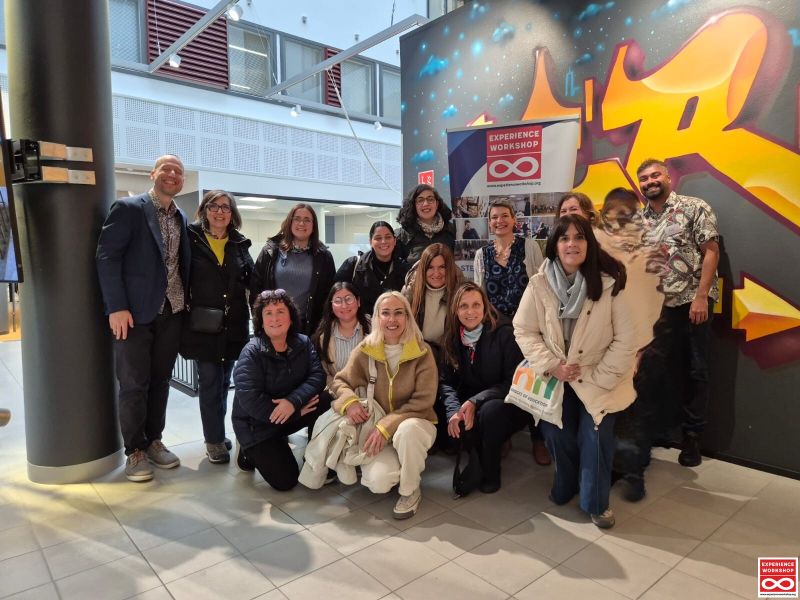
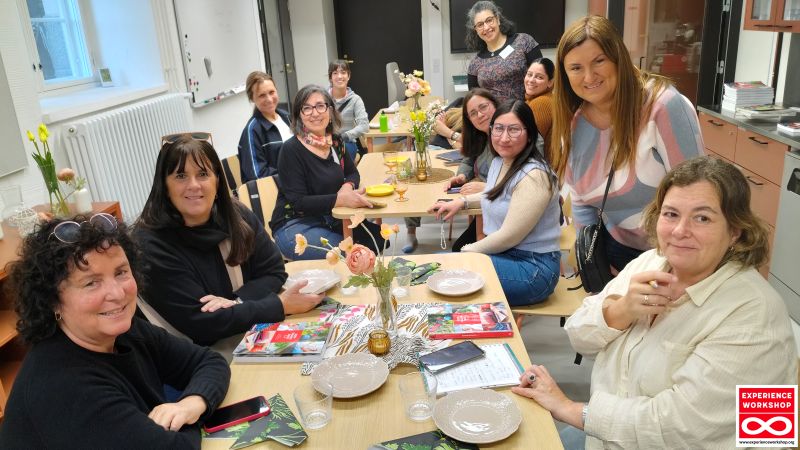
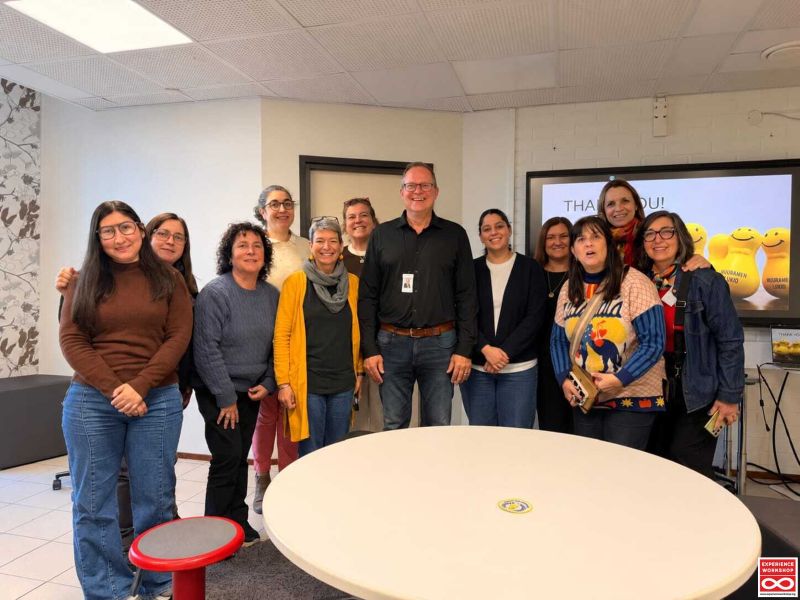
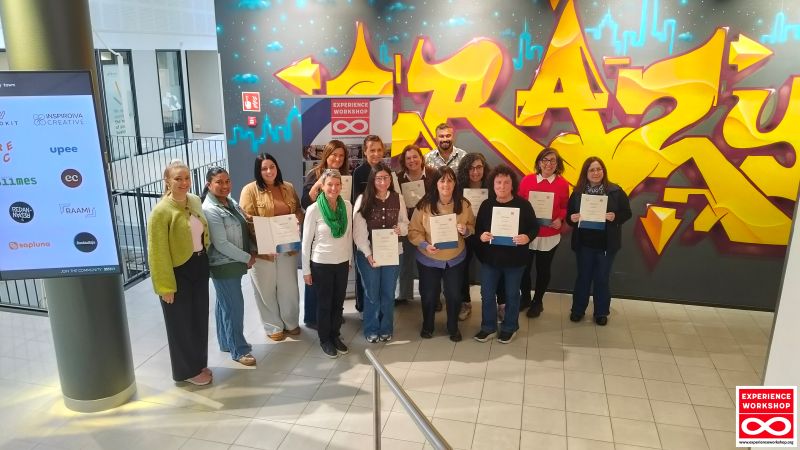
Eleven teachers came all the way from Uruguay to understand what Finnish education is like in practice and why it is still ranking so high. They belong to a loose network of teachers, mainly from secondary schools, connected by Chemistry teacher, university researcher Silvana Flecchia, who has been actively establishing educational bridges between Uruguay and Finland through the FinnURU STEAM university project.
Of course, the eleven teachers also joined forces to see how they can actually transfer some of the useful findings into their own teaching. Not surprisingly at all, their conclusion was “Don’t adopt, adapt!”, after seeing that it’s not all about the education system, but about Finnish society, culture and attitudes that make Finnish education so specific.
From Monday to Friday on a rainy September week they have visited a preschool, a comprehensive school, a high school and the university – all in Jyväskylä.
Voionmaa preschool
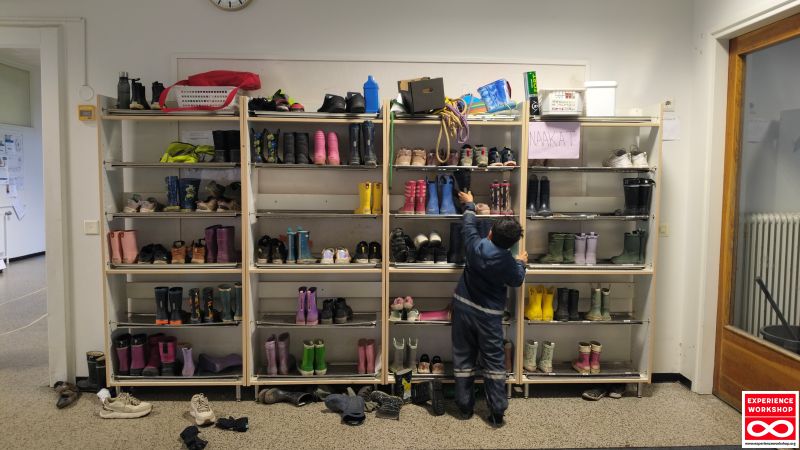
In the Voionmaa preschool, Susan Helldén-Paavola uses outdoor pedagogy to introduce 5-6 year olds to geometrical shapes and numbers. They played small games of their choice in the sports field. They do so, no matter what the weather is like! Since children wear water-proof gowns and rubber boots, they jump in the puddle if they want.
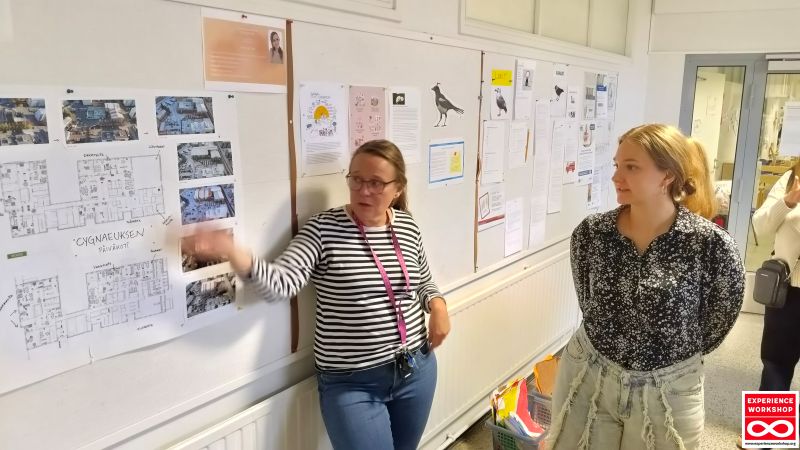
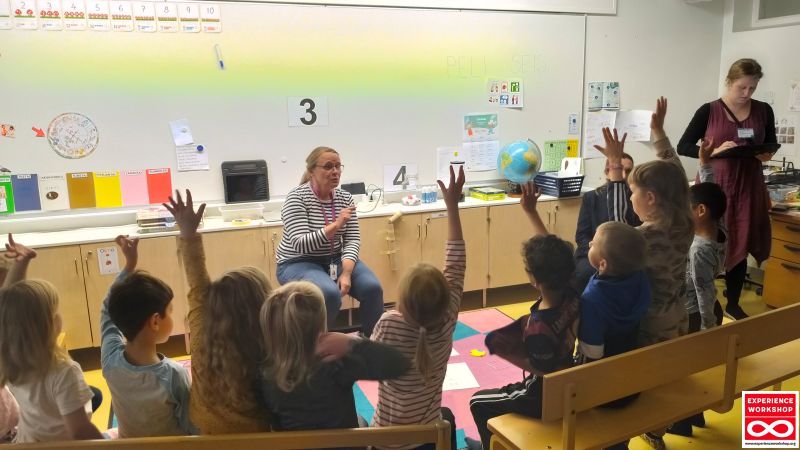
Susan said that the facility is temporarily here and that they will move to a brand new building. Preschool teachers, children and their parents participated in deciding about the interiors of the new center.
The Christian school
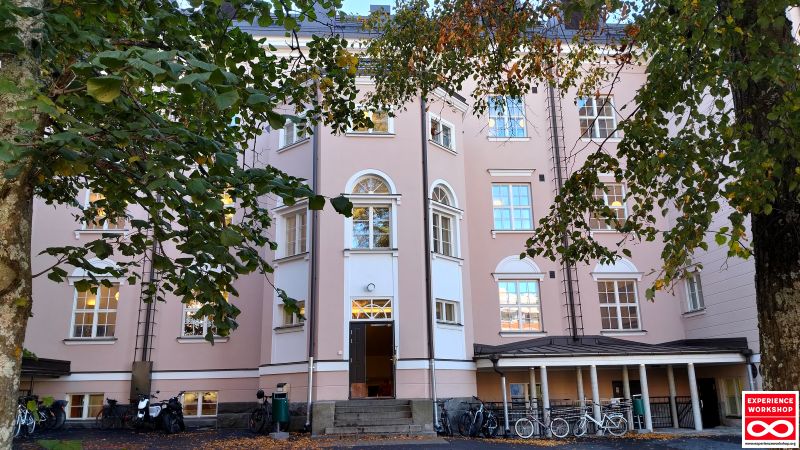
The Christian school is the only private school in the city. It’s run by an association representing the Christian churches in Finland. Basically they follow the same curricula as the public schools. They are proud of their 100-year-old building which has undergone profound refurbishment and opened again a year ago. Visitors have observed here a handicrafts class, where students practiced the technique of pointillism on an autumn landscape scene.
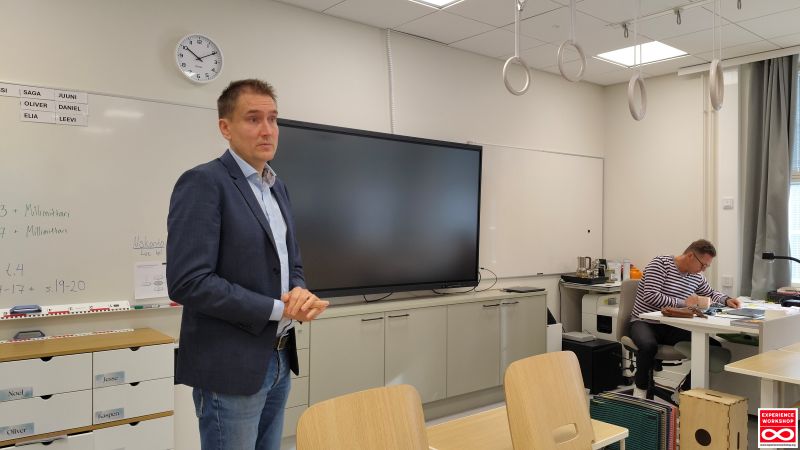
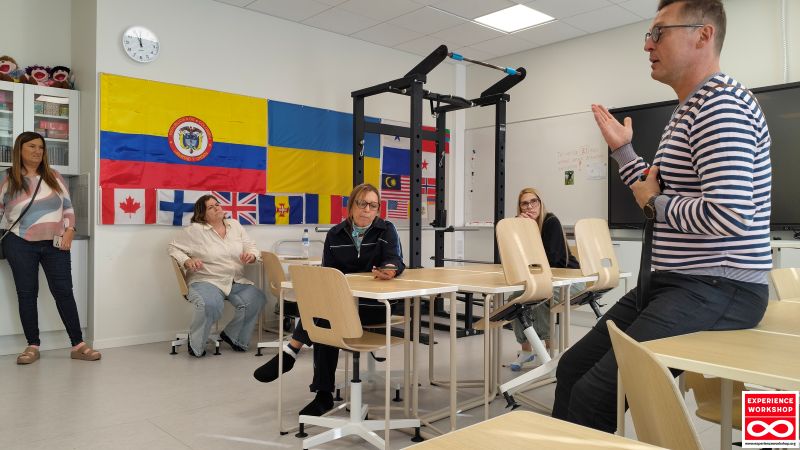
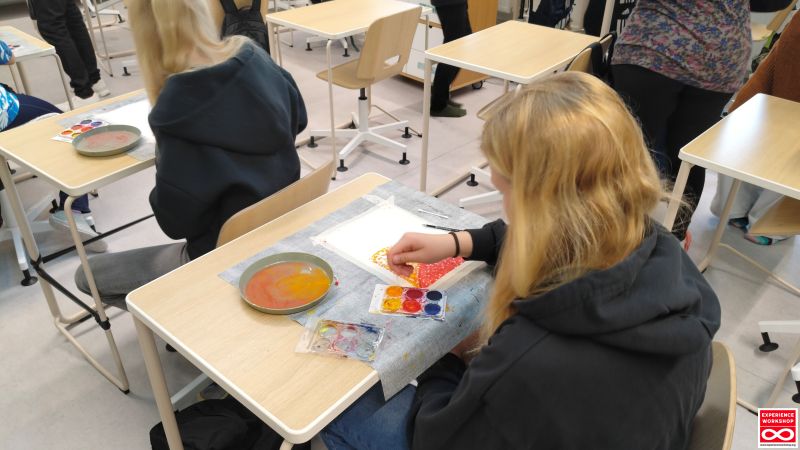
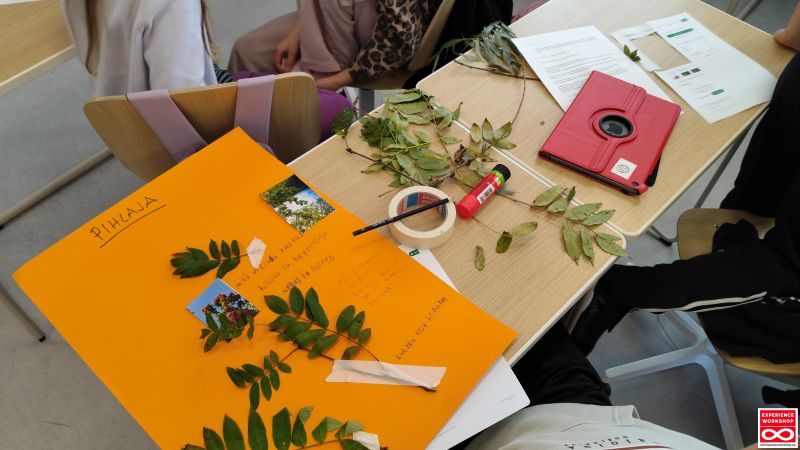
During the natural sciences class, each student created an A3 sheet introducing one of the tree species in Finland. They used the leaves they’ve collected earlier and also their tablets to take photos and search for information. There was also a Spanish, a Maths and a home economics class to visit and to talk with teachers.
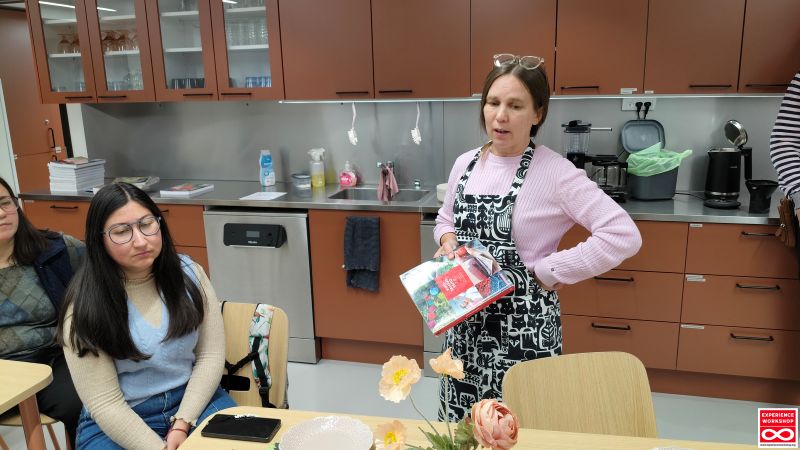
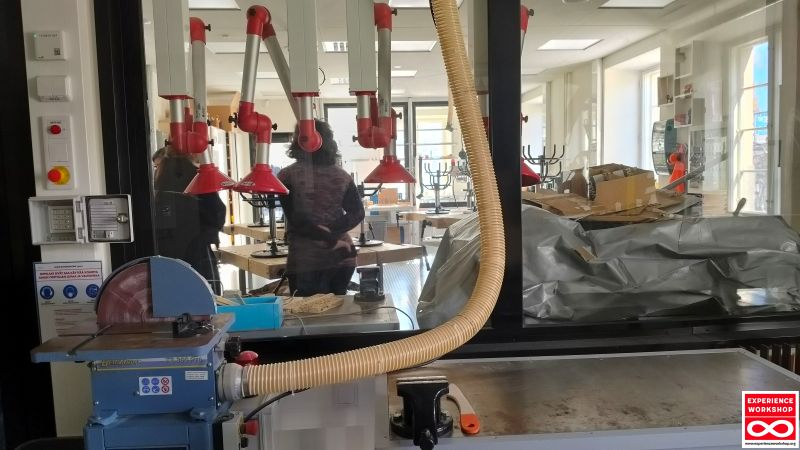
Teacher Jukka Sinnemäki’s goal has been for over 15 years to explore why primary school children’s school performance was deteriorating. He created his own measurements, and based on the results, he offered new ways to facilitate children’s reading and concentration skills. There are publications and an upcoming PhD degree among his results. Jukka’s classroom has climbing walls, adjustable tables, gymnastic rings and a wall of real plants.
Muurame high school
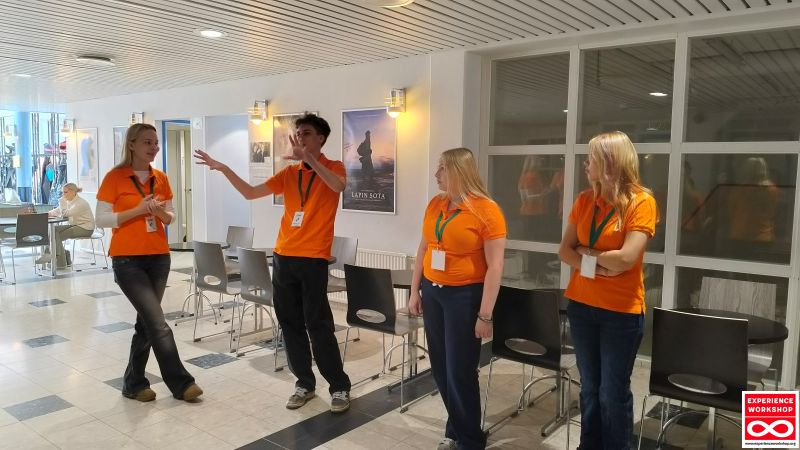
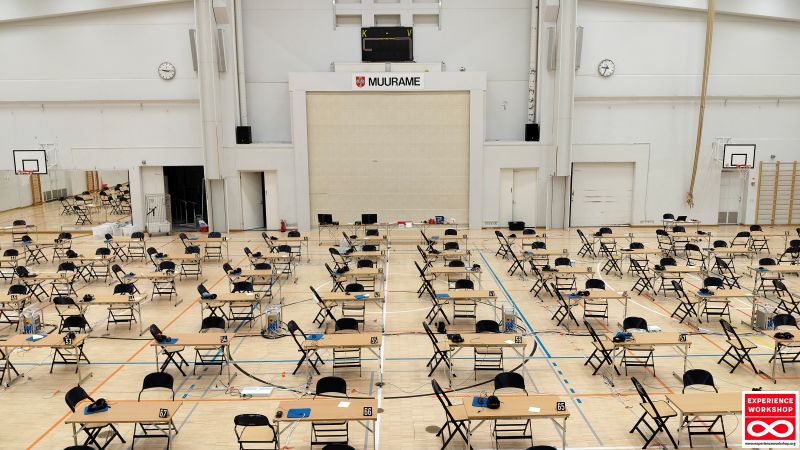
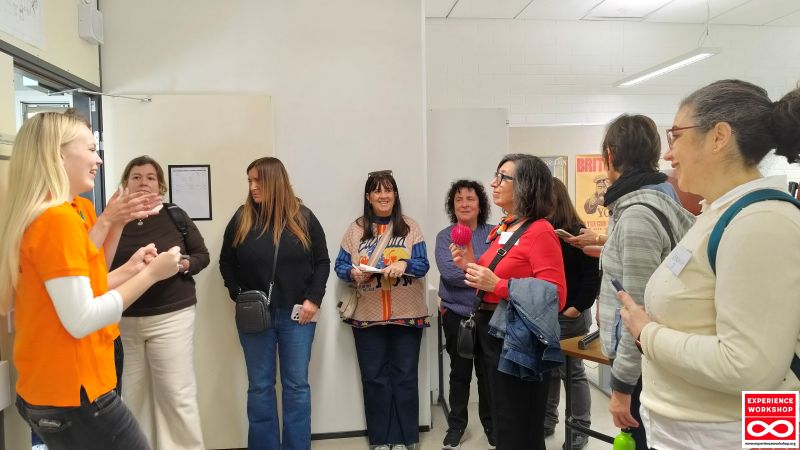
The autumn round of the matriculation exams was held exactly during the Uruguayian educators’ stay in Finland. Principal Aki Puustinen of the high school in Muurame has shown the group those spaces, where the exams are held. Later his volunteering students guided visitors in the building. This school has a special focus on business, also going back to the fact that the small town of Muurame is home to many companies, among others the world known sauna stove manufacturer Harvia. Just as in all other Finnish high schools, also in Muurame, the year is divided into 5 periods, and students have a lot of freedom to choose their own subjects. And also how they dress, one of the guides explained.
STEAM and AI training sessions
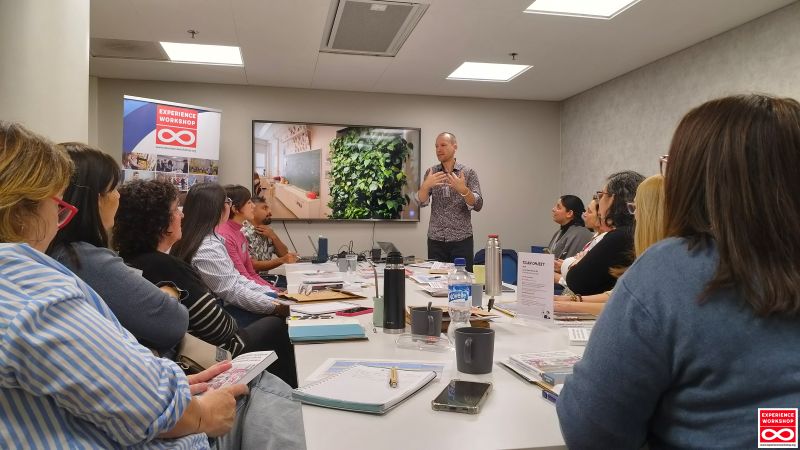
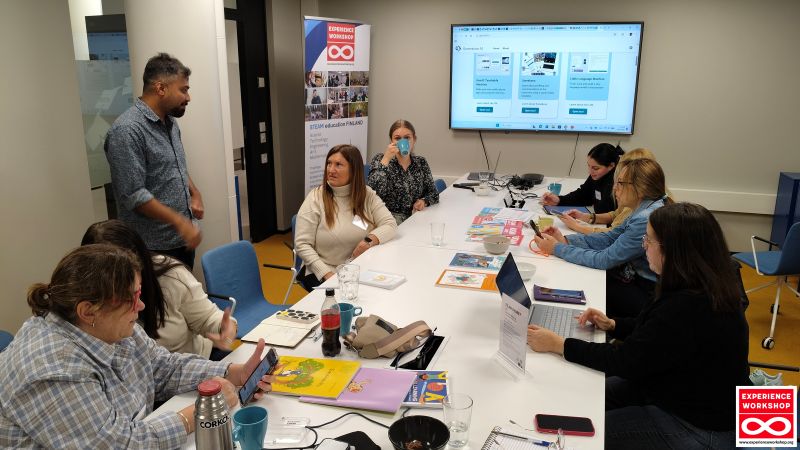
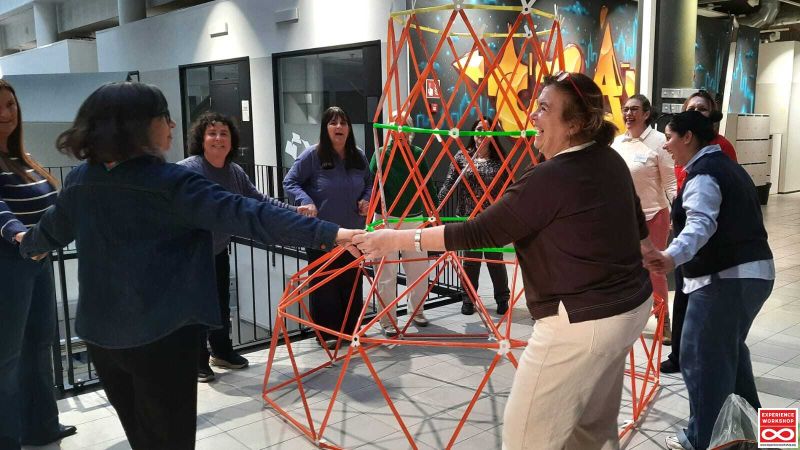
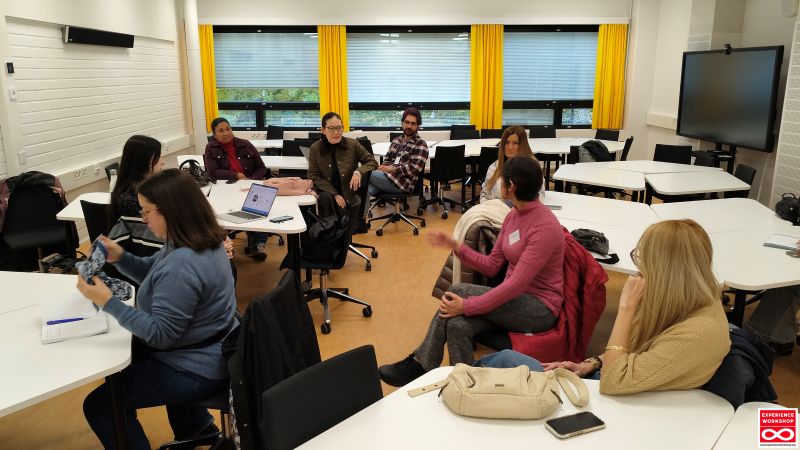
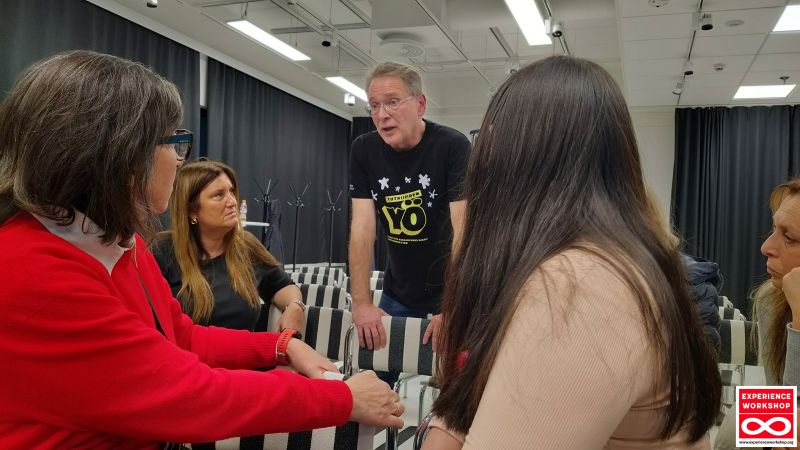
The institutional visits were accompanied by training course hours in the afternoons, which were thematically largely adapted to the group’s interests. Their goal was to develop in STEAM and gain guided practical insights into the creative use of AI tools in their teaching. These new insights they thank to Kristof Fenyvesi (Experience Workshop’s STEAM director) and Samuel Madtha, university researchers and teacher trainers.
University of Jyväskylä
At the University of Jyväskylä, during a meeting with the Innovative Learning Environments Research group, Kristof Fenyvesi and his colleagues opened up new perspectives on the research aspects, for example of digital wellbeing. On the very last evening, the Researchers’ Night, they met Kari Nissinen, leading evaluator of PISA in Finland – to discuss how socio-emotional circumstances are taken into consideration in the PISA measurements.
Feedback from participants
“I learnt about the importance of self-regulation, the value of learning environments and teachers’ commitment.”
“The school visits and exchanges with Finnish educators gave me new ideas and practical strategies that I can adapt to my own teaching context and share with colleagues.”
“In a short space of time, we’ve managed to develop real, useful projects to solve problems within our institutions, tailored to our specific context.”
“On a personal level, the experience strengthened my confidence, flexibility and ability to collaborate with people from different educational and cultural backgrounds.”